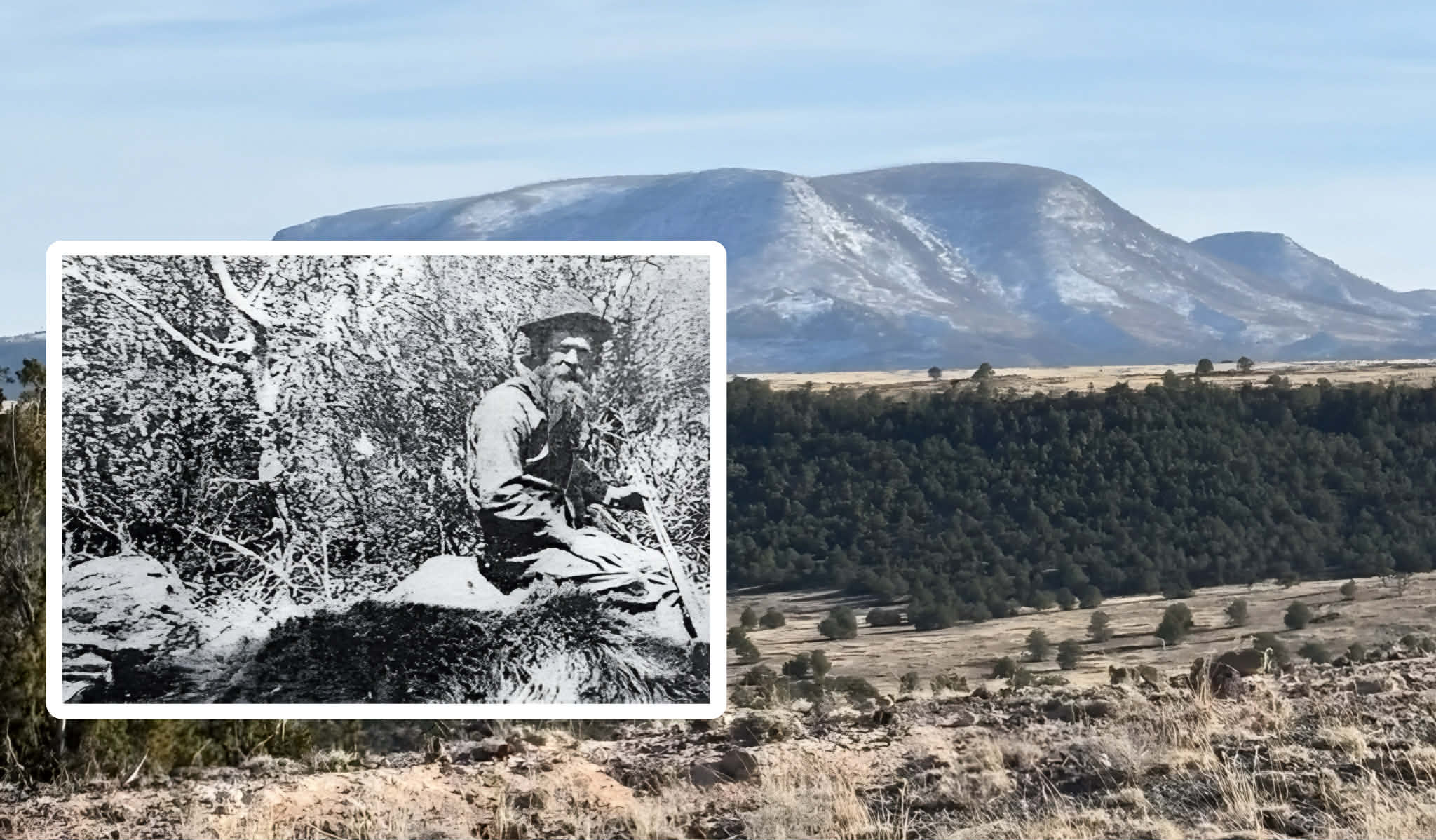
For generations, 1935 has been cited as the year Arizona’s last grizzly bear was killed. Bob Housholder, in The Grizzly Bear in Arizona, was careful with his wording, writing that “Arizona’s last reported kill was in 1935.” That distinction matters because it marks the end of official documentation, not the end of the silvertip grizzly bear in Arizona.
You will read that, historically, the grizzly bear was given several scientific names, according to Housholder: Apache grizzly, Arizona grizzly, New Mexico grizzly, Texas grizzly, Navajo grizzly, and Sonora grizzly. All are considered silvertip, so we will use that term here.
The 1935 kill involved federal hunter Richard R. “Dick” Miller. The day the last grizzly reported to be killed in Arizona was no different than any other on the Joe Filleman spread near Red Mountain northeast of Clifton. Dick had his 30-30 in the scabbard under his left leg and was riding his pet hunting horse. His seven hounds were along as Dick went out that day looking for a calf kill. He was at the bottom of Stray Horse Canyon, east of Rose Peak, when the dogs lit out on a bear scent. In a matter of minutes, they doubled back and came in under him. Dick fired from the saddle and killed the bear running in front of the pack. It was a three-year-old, and Miller estimated it to weigh about 300 pounds. He looked around the area and found evidence that the bear had a twin and a mother in the area. It was late, so Dick skinned the bear and headed for the ranch.
Two days later, Kit Casto and another witness, identified in Housholder’s account as Mr. Black, positively identified the bear as a grizzly. A photograph later reproduced in Brown’s book shows Miller standing beside the hide nailed to a cabin wall.
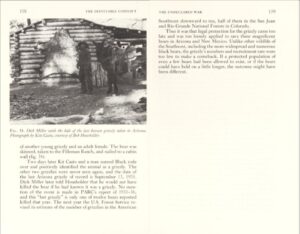
Housholder later recorded Miller’s regret. “Dick Miller told me that he would have never killed the bear had he known it was a grizzly,” he wrote. More importantly, Housholder noted that the bear was not alone. “The other two grizzlies were never seen again.” That single sentence undermines the long-held assumption that the species vanished in 1935. Even as the last recorded kill was being logged, other grizzlies were still present on the landscape.
One of the clearest examples came the following year. In 1936, Wayland Potter, Tom Holcomb, and Roy Davenport pursued a large bear at the Bar Heart Ranch in the Sycamore Canyon country. The men identified the animal as a silvertip grizzly based on its pronounced shoulder hump, long claws, dished face, cream coloration, and its refusal to climb trees. The chase ended without a kill. Housholder recorded the outcome plainly: “Potter’s bear fought off the hounds and got away. The three men agreed that they had run a silvertip, but no one ever saw the tracks or heard of the bear again. This was in 1936.” That bear — the one that ran off and was never seen again — stands as documented evidence that Arizona grizzly bears lived in Arizona after the last official kill in 1935.
“We realize that many silvertip bears were killed here that we did not hear about,” wrote Housholder. Noting that his accounts, written and wonderfully documented, were not the end of the grizzly’s stronghold or the final word on the extirpation of the animal.
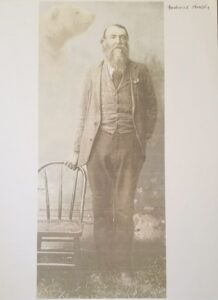
Housholder also documented a violent close-range encounter involving Bosnic Lupe, an Indian and longtime ranch hand who had worked for Colonel J. W. Ellison. While tracking a wounded deer, Lupe surprised a grizzly at close range. He shot the bear in the throat, but was knocked down, bitten, and mauled. As the bear chewed on his arm, Lupe managed to reload and fire repeatedly until the grizzly finally died. Before leaving the scene, Housholder wrote, Lupe piled rocks over the body “to keep his spirit from getting away.” The account reflects both the persistence of grizzlies into the final years and the brutality of human–grizzly encounters in Arizona’s high country.
Then, Housholder wrote about the grizzly encounter with Fred Hamblin, an Alpine rancher, although he didn’t know the exact date; we believe it was in 1890. The account of Mrs. Bradshaw in Pinetop around the turn of the century, with an 800-pound old boar, was told by the eldest of the three children, Ellen Bradshaw.
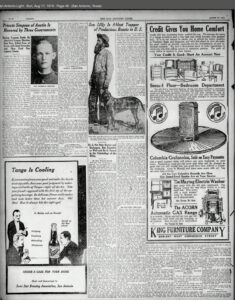
By the early twentieth century, predator eradication had become normalized and even celebrated. A 1919 profile in The San Antonio Light praised government hunter Ben Lilly as the “ablest trapper of predacious beasts in the U.S.,” lauding his work eliminating bears, wolves, and mountain lions across the Southwest. The article reflected the prevailing belief of the era: that large carnivores were obstacles to progress rather than essential parts of the ecosystem. That mindset shaped federal policy and explains what followed.
Lilly was an accomplished marksman and used Winchester lever-action rifles, a .30-30 for cougars and a .33 Winchester (.33 WCF) caliber for bears. He also tempered his knives in what he called “panther oil” (lion urine) on stove lids until they were the color of straw. It’s been said that Lilly used a young lion to train his hounds.
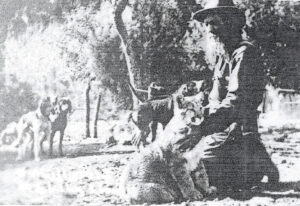
Benjamin Vernon Lilly with a young lion and his hounds.
Ecologist and wildlife biologist David E. Brown later brought these threads together in The Grizzly in the Southwest: A Documentary of an Extinction. Brown explicitly acknowledged the foundation laid by Housholder, writing that “Housholder’s The Grizzly Bear in Arizona was an important contribution because he had the foresight to interview many individuals who had actually known Arizona grizzlies. None of those whom he cited are alive today.” Brown also drew a clear distinction between recordkeeping and extinction: “The last Arizona grizzly of record is September 13, 1935.”
After synthesizing archival records, agency reports, and firsthand accounts, it can be concluded that the final Arizona grizzly encounter occurred on Escudilla Mountain in the summer of 1936. The bear was a large adult boar, locally known as “Old Bigfoot.” Before Browns death in 2021, he confirmed that “Old Bigfoot” was killed by a federal predator-control agent with the U.S. Biological Survey, the agency responsible at the time for removing animals considered threats to livestock. The killing was carried out with a set gun. With that death, the grizzly bear was officially extirpated from Arizona and/or moved out of the state.
The timing carries weight. “Old Bigfoot” was killed in the summer of 1936, according to Aldo Leopold and Brown, with a set gun. The last silvertip grizzly shot himself in the brisk silence of Escudilla Mountain.
Ben Lilly, whose life had spanned the height of government predator eradication, died at 80 years old in December 1936 on a ranch near Silver City, New Mexico. His modest tombstone bears the epitaph: “Lover of the Great Outdoors”. In 1947, the last people who knew him erected a bronze plaque in his memory on Bear Creek, Pinos Altos, New Mexico.
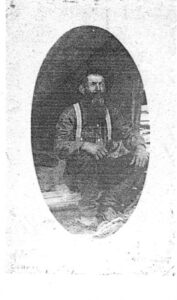
Lilly did not kill the last Arizona silvertip grizzly, but the Arizona grizzly died with him that same year, at the close of an era that viewed the Arizona grizzly as a natural killer, and the most ferocious animal living, capable of taking down a 1500-pound bull.
Dick Miller, whose 1935 kill marked the last documented grizzly death in Arizona, lived on until his death in 1963, and had many conversations about the vast Arizona mountains with Housholder.
Together, the record supports a clear conclusion. The last documented grizzly kill occurred in 1935, but grizzlies remained alive in Arizona thereafter. It’s also possible the grizzly moved farther east into New Mexico and into Colorado.
The last confirmed grizzly bear in Colorado was killed in September 1979 in the San Juan Mountains, decades after wildlife officials believed the species had disappeared from the state. The bear, an aging female, was killed in self-defense by bow hunter Ed Wiseman, who was mauled during the encounter and managed to fatally stab the bear with an arrow. The incident stunned biologists, as grizzlies were thought to have been extinct in Colorado since the 1950s. The bear’s remains are now preserved at the Denver Museum of Nature & Science.
The extinction of the silvertip in Arizona did not arrive in a single moment. It came, one grizzly at a time. Even in the state’s most remote country, the epicenter of freedom and wild that was once merged with silence and wonder, the fierce Arizona wild died slowly, and ultimately, man killed the most fearsome beast in the name of survival.
The Grizzly Bear in Arizona by Bob Housholder. Courtesy of Ms. Wink Crigler of the XDiamond Ranch. The document is held in trust by Mountain Daily Star for the community to read and use for educational purposes.
We would like to thank Ms. Wink Crigler for her time and dedication to the history of the Arizona White Mountains.