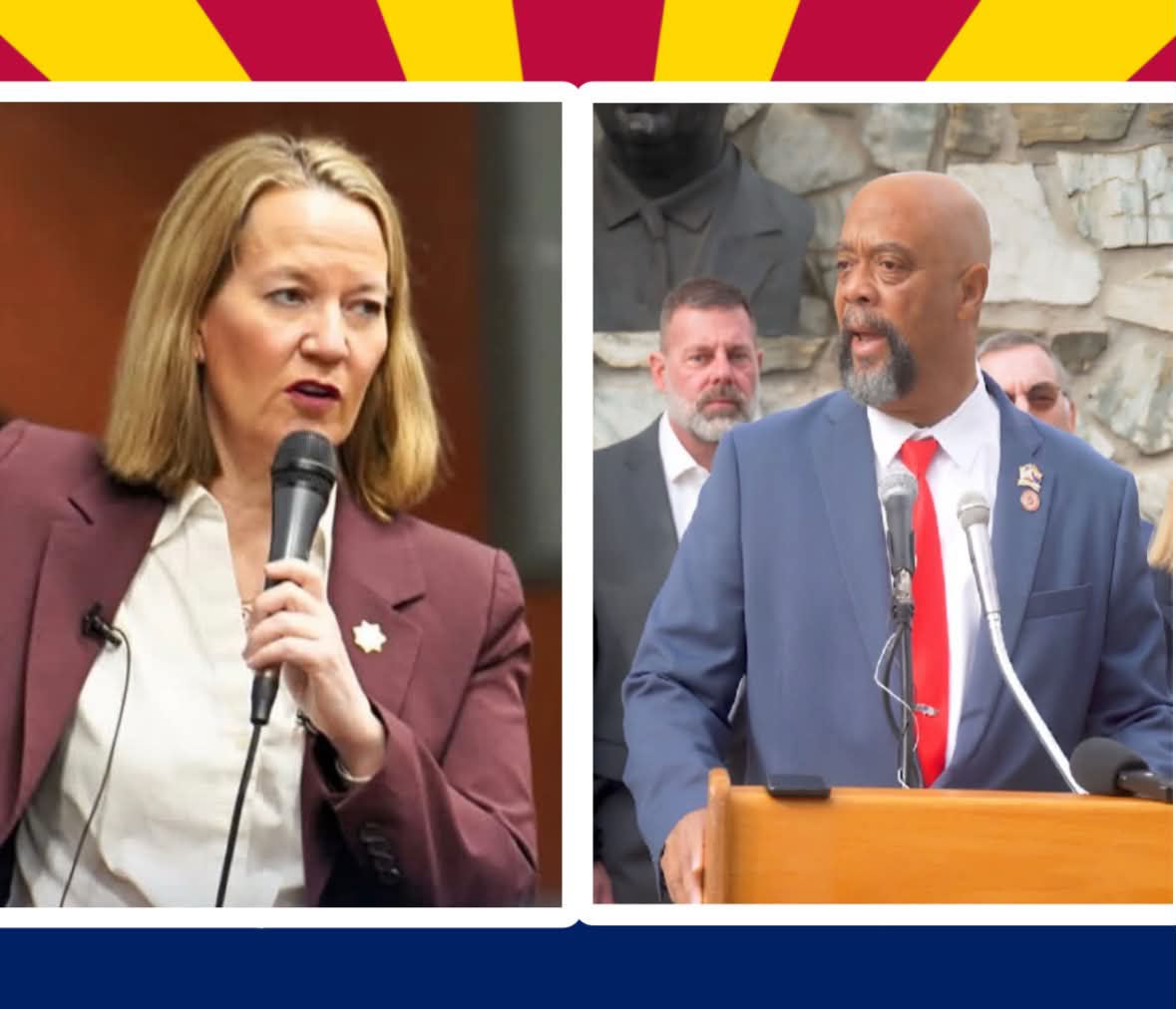
NAVAJO COUNTY— A Maricopa County Superior Court judge has ruled that Navajo County Recorder David Marshall may continue serving in office, rejecting Arizona Attorney General Kris Mayes’ lawsuit challenging his eligibility under the Arizona Constitution. In doing so, the court issued a detailed interpretation of Article IV, Part 2, Section 5 of the Arizona Constitution, addressing a question that had not previously been resolved until now.
In a seven-page ruling issued on July 7 in response to a lawsuit filed on May 14, Judge David McDowell denied the Attorney General’s request for a writ of quo warranto seeking to remove Marshall from office and declare the position vacant.
You can read our article about the beginning of the May 14 lawsuit here.
The Lawsuit and July 7 Decision:
The lawsuit centered on Article IV, Part 2, Section 5 of the Arizona Constitution, which states that no “member of the legislature, during the term for which he shall have been elected or appointed,” is eligible to hold another state, county, city, or town office. The Attorney General argued that because Marshall was elected to a legislative term that does not expire until January 2027, his resignation from the Legislature did not remove the constitutional prohibition against accepting another public office during that elected term.
Marshall argued that the constitutional restriction applies only while an individual is actually a member of the Legislature. Marshall resigned from the Arizona House of Representatives on April 17, 2026, after being appointed by the Navajo County Board of Supervisors to fill the vacant Recorder position. He was sworn in as Navajo County Recorder on April 21.
Before reaching the constitutional question, Judge McDowell addressed Marshall’s motion to dismiss the lawsuit. Marshall argued that the Attorney General had chosen the wrong legal procedure, contending the challenge should have been brought as a certiorari action rather than through a quo warranto proceeding. He also argued that the Attorney General lacked standing because the State had failed to identify a specific law that had been violated or demonstrate a legally recognizable injury.
Judge McDowell rejected those arguments.
The court concluded that Arizona law expressly authorizes the Attorney General to bring a quo warranto action under A.R.S. § 12-2041 when a person is alleged to be unlawfully holding public office. The judge found that the State properly alleged Marshall was unlawfully exercising the duties of Navajo County Recorder and that the Superior Court had jurisdiction to hear the dispute. “The Court finds the State has properly brought this as a quo warranto action in the Superior Court.”
The court also determined that the Attorney General had sufficiently alleged a violation of law and public injury for the lawsuit to proceed. Judge McDowell explained that, at the motion-to-dismiss stage, the court accepts the allegations in the complaint as true and determines only whether the State has stated a legally recognizable claim.
Having denied the motion to dismiss, the court turned to the merits because both parties agreed there were no disputed material facts requiring a trial. The court explained that the parties agreed on the timeline of Marshall’s resignation and oath of office, leaving a single question of law: Whether Article IV, Part 2, Section 5 of the Arizona Constitution permitted Marshall to assume the office of Navajo County Recorder after resigning from the Legislature but before the expiration of his elected legislative term.
In addition to the arguments presented by the parties, the Arizona House of Representatives filed an amicus curiae brief through Speaker of the House Steve Montenegro urging the court to deny the Attorney General’s challenge. Although not a party to the lawsuit, the House argued that Marshall became eligible to serve as Navajo County Recorder when he resigned from the Legislature before taking the oath of office.
The House maintained that the Arizona Constitution distinguishes between an individual who is a current “member of the legislature” and one who has resigned. According to the brief, Marshall lawfully relinquished his legislative office before assuming the duties of Navajo County Recorder and therefore did not violate Article IV, Part 2, Section 5. The House also argued that adopting the Attorney General’s interpretation would discourage legislators from resigning to accept appointments to other public offices and would expand the constitutional restriction beyond its plain language. Judge McDowell acknowledged the House’s filing and considered its arguments before issuing his decision.
Judge McDowell also examined Arizona statutes governing vacancies in public office. The opinion notes that Arizona law recognizes resignation as one of the events that creates a vacancy in office. Because Marshall resigned from the Legislature on April 17, four days before taking the oath as Navajo County Recorder, the court concluded he was no longer serving as a legislator when he assumed the county office.
The court emphasized that constitutional provisions should be interpreted so that every word is given effect whenever possible. Judge McDowell concluded that interpreting Article IV, Part 2, Section 5 as urged by the Attorney General would fail to give independent meaning to the word “member.” The opinion further notes that Arizona law recognizes several ways a legislator may cease to be a member before an elected term expires, including resignation, death, expulsion, or other legally recognized vacancies. The court concluded that once an individual is no longer a member of the Legislature, the constitutional restriction no longer applies.
The court also discussed the historical purpose of the constitutional provision, explaining that it was intended to prevent sitting legislators from using their legislative office to create, influence, or benefit from another public office while they remained members of the Legislature. The opinion distinguishes that purpose from the circumstances presented in Marshall’s case, where he resigned before accepting the county office. The court further explained that the case did not concern whether the Navajo County Board of Supervisors properly exercised its appointment authority, but only whether Marshall was constitutionally eligible to serve after resigning from the Legislature.
Judge McDowell ultimately concluded that Marshall became eligible for the office upon his resignation from the Legislature. “The Court does not find that Mr. Marshall was a member of the legislature after April 17, 2026.”
The court continued: “Because he was no longer a member of the legislature, Mr. Marshall’s acceptance of the Navajo County Recorder position by taking an oath of office on April 21, 2026 did not violate Article IV, Part 2, Section 5 of the Arizona Constitution.”
Judge McDowell further wrote: “To become eligible, a member of the legislature must cease being a member or wait for his/her elected term to end.”
The opinion continues: “Mr. Marshall became eligible to serve as the Navajo County Recorder upon his resignation—the point at which he ceased being a member of the legislature.”
The court ultimately concluded that Marshall is not unlawfully holding the office of Navajo County Recorder and denied the Attorney General’s request for relief. “IT IS ORDERED denying the State’s request to issue a writ of quo warranto holding that the office of the Navajo County Recorder is vacant.”
Because the court found Marshall is lawfully holding office, it ruled that the Attorney General’s request for additional relief under A.R.S. § 12-2045 was moot. The court also ruled that Marshall may seek attorney’s fees under A.R.S. § 12-348, ordering any fee application to be filed by July 17, 2026, with objections due by July 27, 2026.
Following the ruling, Marshall issued a statement welcoming the court’s decision. “We appreciate the court’s thoughtful analysis and correct interpretation of the plain text of the Arizona Constitution. This ruling vindicates the Navajo County Board of Supervisors’ appointment of Recorder Marshall and the Board’s implicit determination that he is eligible for county office under the Arizona Constitution because he lawfully resigned before assuming office as the Navajo County Recorder.
This ruling in Recorder Marshall’s favor also protects the constitutional rights of all legislators in Arizona and sets judicial precedent going forward. Instead of conflicting Attorney General opinions with little analysis, we now have a clear judicial ruling establishing that legislators who lawfully resign from their legislative positions to accept appointments to other public offices have not violated Article IV, Part 2, Section 5, and will not face similar threats of quo warranto lawsuits from private actors or the Attorney General.”
The Attorney General may appeal Judge McDowell’s decision to the Arizona Court of Appeals. If appealed, Arizona’s appellate courts will have the opportunity to determine whether Article IV, Part 2, Section 5 of the Arizona Constitution bars legislators from accepting another public office after resigning before the expiration of their elected terms. Until the AG’s office makes its decision, Judge McDowell’s ruling leaves Marshall in office as Navajo County Recorder while the constitutional challenge is resolved in his favor.