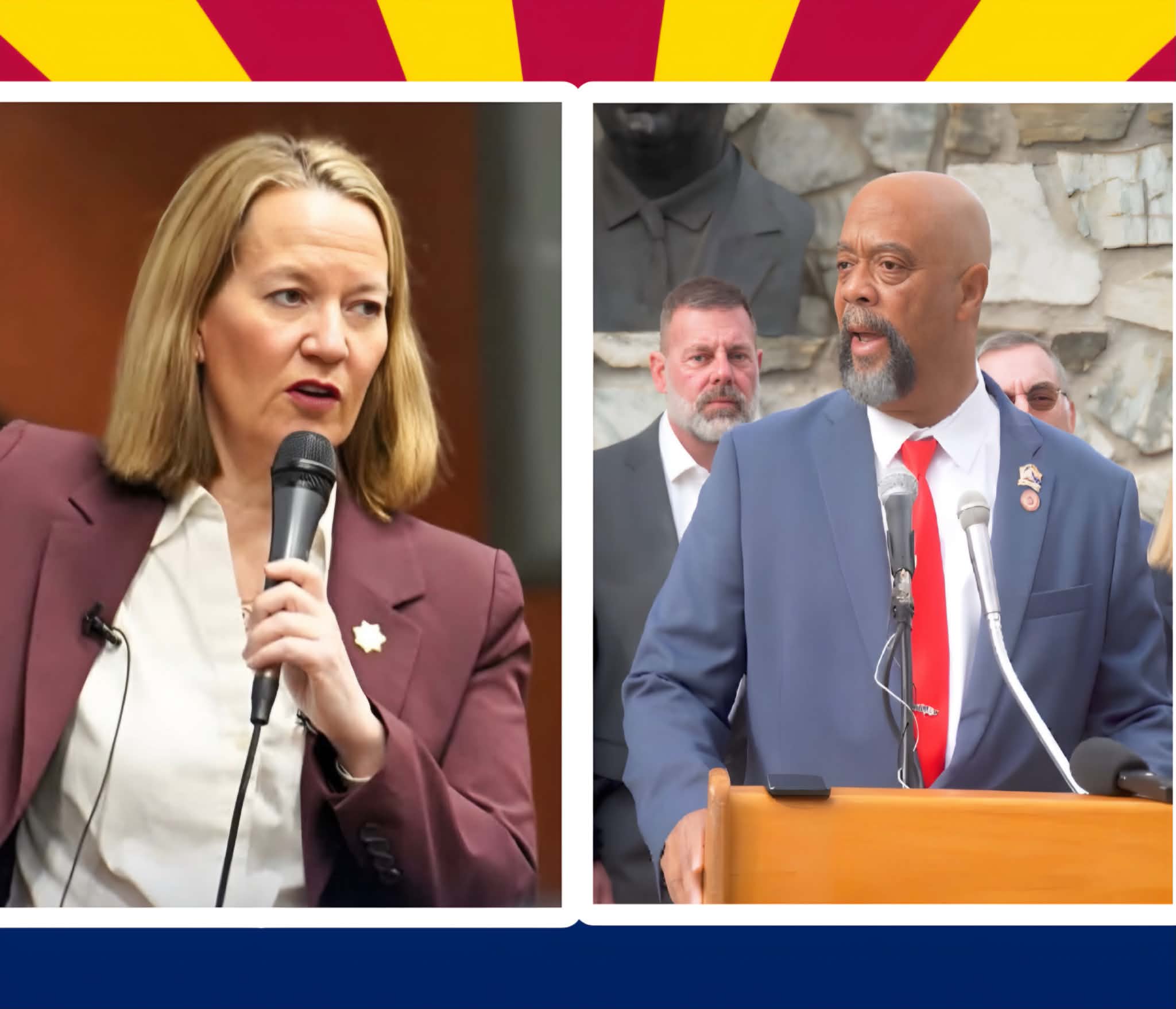
HOLBROOK, Ariz. — A growing constitutional dispute over the appointment of Navajo County Recorder David Marshall Sr. is now headed to court after Arizona Attorney General Kris Mayes filed a quo warranto lawsuit seeking his removal from office, arguing the former state legislator remains constitutionally ineligible to serve until January 2027 despite resigning from the Arizona House of Representatives.
A writ of quo warranto lawsuit is a special legal action used to challenge whether someone is lawfully holding a public office.
The phrase “quo warranto” is Latin for “by what authority.” In simple terms, the lawsuit asks: “By what legal authority are you holding this office?”
In Arizona, quo warranto actions are governed primarily by A.R.S. § 12-2041. Under that law, the Arizona Attorney General may bring a lawsuit when the state believes someone is unlawfully occupying a public office.
The legal challenge stems from Marshall’s appointment by the Navajo County Board of Supervisors during its April 14, 2026, meeting to fill the vacancy created by the resignation of former Recorder Timothy Jordan, who stepped down effective April 15.
According to an official county press release issued April 20, the Board voted to appoint “Representative David Marshall (R-Snowflake) as the next Navajo County Recorder” following what county officials described as a competitive application and interview process involving a strong pool of applicants.
“The County received a strong pool of applicants, and the Board recognizes the time, effort, and commitment demonstrated by each candidate throughout the application and interview process,” the county stated.
The release explained that Marshall resigned from the Arizona House, effective April 17, “to accept the appointment,” and also withdrew his candidacy for the Arizona Corporation Commission.
That sequence of events — appointment, resignation from the Legislature, and subsequent swearing-in as Recorder — now sits at the center of a constitutional fight between the Attorney General’s Office and Marshall’s legal team.
Marshall’s resignation created a vacancy in Legislative District 7, triggering Arizona’s statutory replacement process in which the Navajo County Republican Party submitted nominees to the Board of Supervisors to complete the remainder of the legislative term.
Chairman Seymore stated the Board intended to address that vacancy quickly.
“We are eager to move forward as soon as the nominations are received,” Seymore said. “Our goal is to ensure that the constituents of District 7 continue to have strong and effective representation in the Arizona Legislature.”
Sylvia Allen (R) was appointed to serve the remainder of Marshall’s term.
The Attorney General’s Office, however, argues that Marshall’s resignation does not cure the constitutional issue.
In an April 24 letter sent directly to Marshall, Attorney General Kris Mayes warned that Article IV, Part 2, Section 5 of the Arizona Constitution bars legislators from holding another state, county, or municipal office during the term for which they were elected.
In Attorney General Kris Mayes’ April 24, 2026, letter to David Marshall, she wrote: “Because your term as an elected representative will not conclude until January 2027, you are not currently eligible to hold another public office or be otherwise employed by the state or ‘any county … thereof.’ Ariz. Const. art. IV, pt. 2, § 5.”
The constitutional provision states: “No member of the legislature, during the term for which he shall have been elected or appointed, shall be eligible to hold any other office or be otherwise employed by the state of Arizona or any county or incorporated city or town thereof.”
Mayes wrote that the Attorney General’s Office has “consistently interpreted” the provision to prohibit legislators from accepting another office during the elected term, “whether or not the legislator resigns.”
The letter further warned that unless Marshall resigned as Recorder, the Attorney General would be required to pursue a quo warranto action under Arizona law.
Because Marshall declined to resign, the Attorney General filed a formal Complaint for Writ of Quo Warranto on May 14 in Maricopa County Superior Court.
The complaint alleges Marshall unlawfully holds the Recorder’s office because he was reelected to the Arizona House in November 2024 for a legislative term running through January 2027. The lawsuit states Marshall served in the Legislature until April 17, 2026, and was sworn in as Recorder on or about April 21.
According to the state, Marshall remains constitutionally barred from serving as Recorder for the duration of the legislative term to which he was elected, regardless of resignation.
“The law is clear, Mr. Marshall is not eligible to serve in this office. AG Mayes alerted him to this in late April and asked him to resign — he did not do so, which led to last week’s action,” said the Arizona Attorney General’s Office to Mountain Daily Star when we reached out for comment.
The lawsuit asks the court to:
A. Issue a writ of quo warranto declaring that David Marshall unlawfully holds
office as Navajo County Recorder and therefore must be excluded from that
office and is guilty of a petty offense. A.R.S. § 12-2045.
B. Declare the office of Navajo County Recorder as vacant.
C. Award the State its costs.
D. Grant such further relief as the Court deems just and proper.
Marshall’s attorney, Linley Wilson of Holtzman Vogel Baran Torchinsky & Josefiak PLLC, forcefully rejected the Attorney General’s interpretation in an 11-page response letter dated May 6, received by Mountain Daily Star.
“Respectfully, your Office’s position is incorrect,” Wilson wrote. “The constitutional text, its historical purpose, the relevant Arizona authorities, applicable statutes, and persuasive decisions from other jurisdictions all strongly support the conclusion that Recorder Marshall is lawfully holding the office of Navajo County Recorder and that no quo warranto action lies.”
Wilson argued that Marshall resigned before taking office and, therefore, was no longer a “member of the Legislature” when he became Recorder.
“At no point did Mr. Marshall simultaneously hold both offices,” Wilson wrote. “He is not currently ‘a member of the Legislature,’ and he was not ‘a member of the Legislature’ when he took office as the Navajo County Recorder.”
The response letter also details the Board’s selection process. According to Wilson, several community members spoke in support of Marshall during the public comment portion of the April 14 meeting, including leadership from the White Mountain Apache Tribe.
Board of Supervisors Chairman Daryl Seymore praised Marshall’s selection in the county announcement.
“The Recorder’s Office requires precision, accountability, and public trust,” Seymore said. “We appreciate Representative Marshall’s eagerness to bring his hardworking approach and years of public service to this important role.”
“I am deeply honored by the confidence the Board of Supervisors has placed in me,” Marshall stated. “I am committed to carrying out the responsibilities of this office with integrity, transparency, and a steadfast dedication to the citizens of Navajo County. I look forward to working collaboratively with county leadership, staff, and the community to serve with excellence.”
Wilson stated the Board interviewed three finalists in executive session before voting publicly by ballot. According to the response letter, Vice-Chair Whitesinger, Supervisor Benally, and Supervisor Whiting voted for Marshall, while Supervisor Peshlakai voted for another candidate, and Chairman Seymore voted to continue the process.
Marshall’s legal team also argues the constitutional provision was designed to prevent corruption and self-dealing by sitting legislators who could create or influence offices for their own benefit while still serving in the Legislature.
Citing State ex rel. Pickrell v. Myers, Wilson quoted the Arizona Supreme Court: “The evil sought to be avoided is the participation by a legislator in the deliberations and enactments pertaining to a public office which might subsequently be held by him during his term as a legislator.”
Wilson contends that concern disappeared once Marshall resigned because he no longer possessed legislative authority or voting power.
Additionally, Marshall’s legal team cited multiple Arizona Supreme Court decisions, including State ex rel. Nelson v. Yuma County Board of Supervisors, Pickrell v. Myers, and Laos v. Arnold, arguing the constitutional restriction applies only to someone actively serving as a legislator, not someone who resigned before assuming another office.
Wilson also challenged the Attorney General’s authority to pursue the case, citing recent Arizona Supreme Court rulings limiting quo warranto actions to situations involving clearly unlawful conduct or ultra vires acts.
The case now presents a significant constitutional interpretation question in Arizona: whether resignation removes the constitutional disability attached to legislative service, or whether the prohibition continues throughout the elected legislative term regardless of resignation.
How this legal decision is decided will shape how Arizona appoints future leadership from the pool of elected leaders who decide to change their path.