
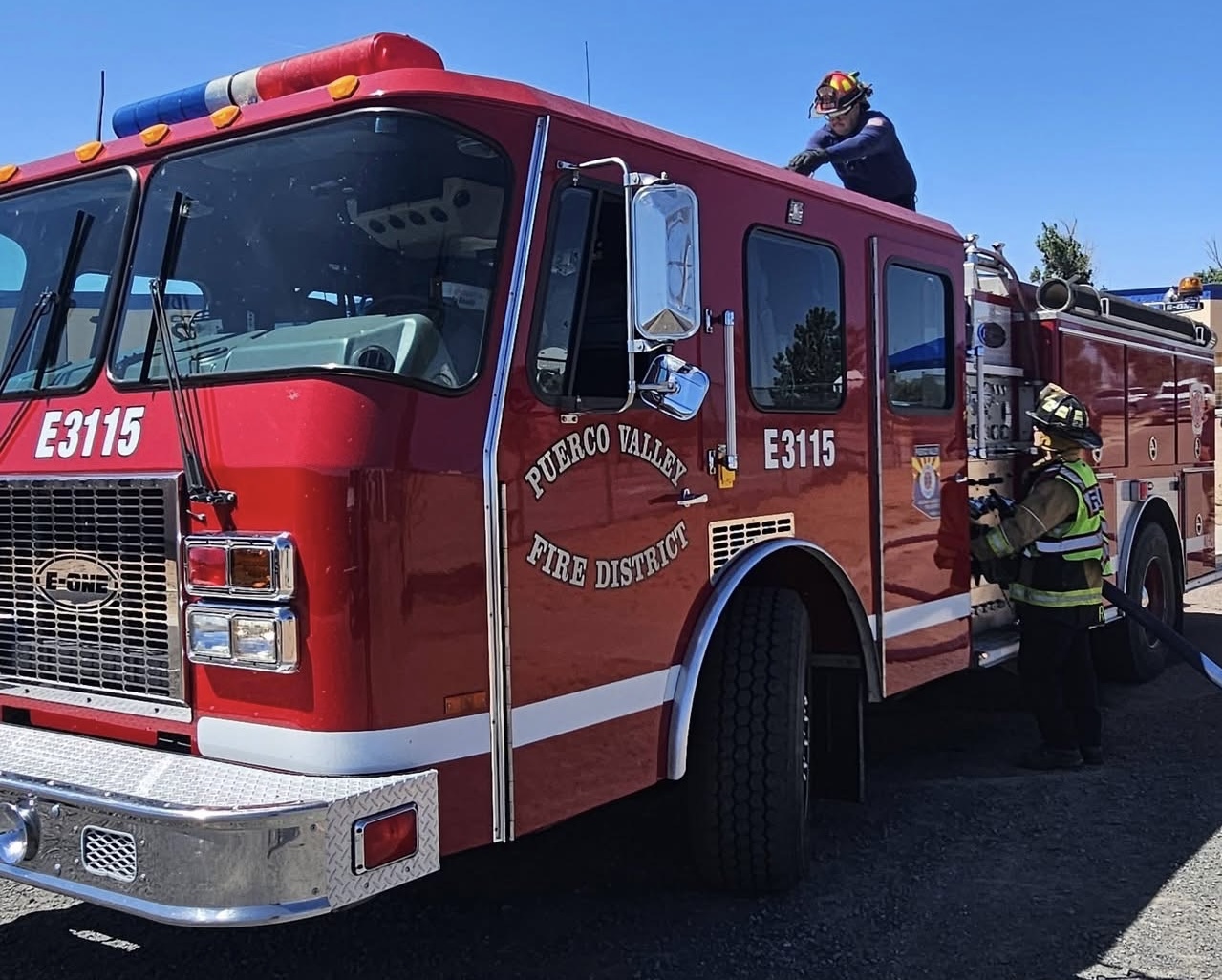
SANDERS — Less than a week after ceasing operations, the Puerco Valley Fire District has filed for bankruptcy under Chapter 9 of the U.S. Bankruptcy Code, leaving neighboring agencies and the Navajo Nation to provide emergency fire protection and emergency medical services across portions of eastern Arizona.
The district’s financial problems had been discussed publicly for several months. During a January 2026 meeting of the Apache County Board of Supervisors, James Watchman Jr., president of the Navajo Nation’s Houck Chapter, told supervisors that the district lacked funding to pay its personnel. Navajo Nation Council Delegate Arbin Mitchell asked the county to assist the Puerco Valley and Ganado fire districts with funding that he said had been frozen.
According to a public notice distributed by the Office of the Speaker of the Navajo Nation, the district closed its doors at noon on Friday, July 24, 2026. District personnel informed the Navajo Nation that emergency agencies in Ganado, Holbrook, and St. Johns had been notified of the closure, and district employees received layoff notices. As of the notice, the district had not provided an estimated reopening date or any additional information regarding its future.
The closure directly affects residents living in and around Nahata Dziil, Wide Ruins, Houck and Tse’ Si Ani, creating a significant gap in local fire protection and emergency medical response. While emergency coverage remains available, officials warned that response times may increase because responding units must travel greater distances. The closure is also expected to place additional demands on neighboring fire departments, EMS agencies, law enforcement personnel, equipment, and existing mutual-aid agreements.
In response, the Navajo Nation Division of Public Safety activated emergency coverage measures. Navajo Nation Fire & Rescue, Navajo Nation EMS and the Navajo Police Department are coordinating emergency response efforts, while EMS units from Fort Defiance, Ganado and Chinle have been deployed to help cover the affected area until additional resources are established. Officials continue to advise residents experiencing a fire, medical emergency or other life-threatening situation to call 911.
The bankruptcy was filed under Chapter 9, a section of the federal bankruptcy code reserved for municipalities and certain public entities. Unlike a liquidation, Chapter 9 allows an eligible public agency to continue to exist while it restructures its finances under court supervision. During the bankruptcy proceedings, the district is generally protected from pending lawsuits, collection actions and other obligations that arose before the filing while it develops a plan to reorganize its debts. However, the district remains responsible for paying any new obligations it incurs after filing.
According to court filings, the district estimates that it has between one and 49 creditors, assets between $500,001 and $1 million, and liabilities between $1 million and $10 million. It reported that funds will be available for distribution to unsecured creditors.
Court records and future bankruptcy filings are expected to provide additional details about the district’s financial condition, outstanding debts, and whether it will eventually resume operations or pursue another long-term solution. The filing marks a significant development for one of northeastern Arizona’s rural emergency service providers and raises questions about the future of fire and emergency medical coverage in the region.