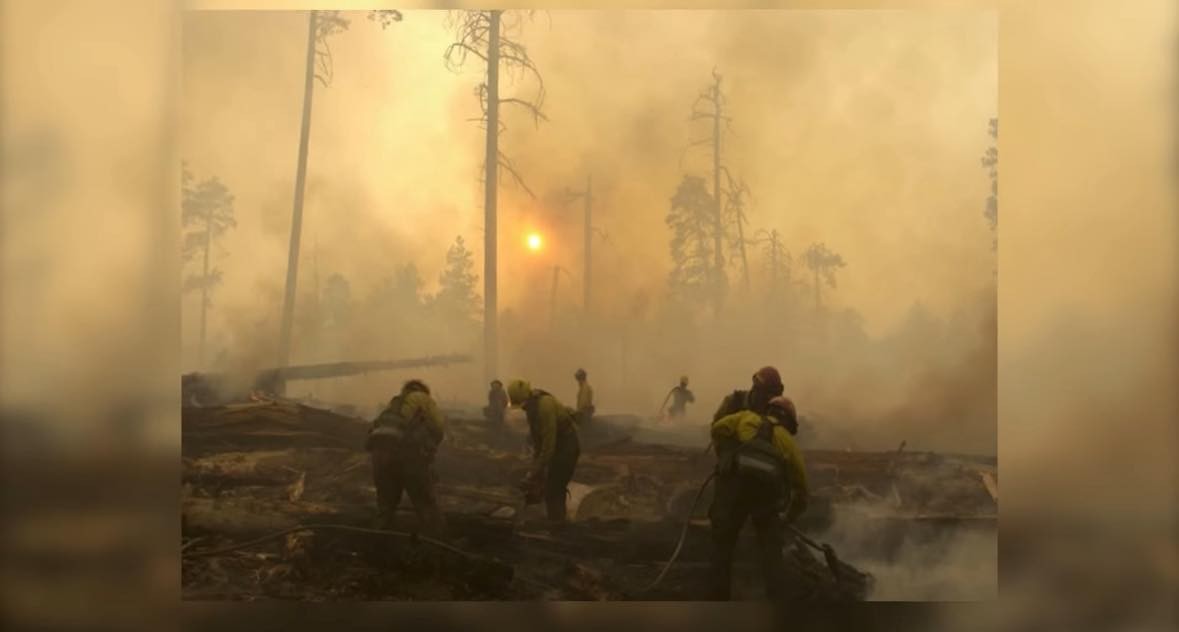
NORTHEASTERN ARIZONA — New research is changing how scientists understand wildfires and climate, and the takeaway is clear: what happens after a fire depends heavily on where it burns. For northern Arizona, the outlook points toward warming, not cooling.
In a recent study published in Nature Geoscience, lead author Zhu Sen and his research team found that wildfires can have both warming and cooling effects on the planet. The difference comes down to factors like snow cover, vegetation, and how the land reflects sunlight after a fire.
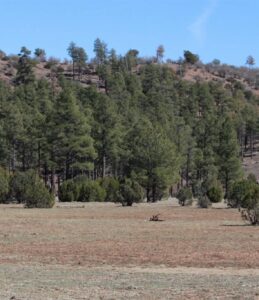
The researchers found that in some northern forests, especially in parts of Canada, burned areas can reflect more sunlight when covered by snow. That reflection can temporarily cool the climate, offsetting some of the carbon released by the fire.
But that effect depends on one key ingredient: consistent snowpack.
Across northern Arizona, including the White Mountains, that ingredient is largely missing. Warmer winters and limited precipitation have left much of the region with little sustained snow cover. Without it, burned landscapes behave very differently.
Instead of reflecting sunlight, fire-scarred ground in Arizona tends to be darker and drier, absorbing more heat. That means wildfires here are far more likely to contribute to warming rather than counter it.
The study’s broader lesson is that wildfire impacts are not universal. As Sen and his co-authors show, the same type of event—a large forest fire—can produce opposite climate effects depending on regional conditions.
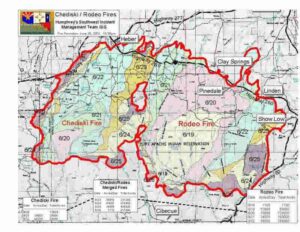
The 2002 Rodeo–Chediski Fire illustrates how that plays out locally. The fire burned roughly 468,000 acres across eastern Arizona, leaving behind extensive areas of high-severity damage where entire forests were lost.
In many of those areas, darker soils and reduced tree cover changed how the land absorbs heat. In some cases, what was once a dense ponderosa pine forest was transformed in a single day into a landscape resembling a desert biome. Some sections have struggled to return to forest at all, transitioning instead to grass or shrubland—landscapes that store less carbon over time.
What we learned from the research is that while some wildfires can briefly cool the climate under the right conditions, those conditions do not apply in Arizona. Here, fires are more likely to reinforce warming trends, especially as snowpack continues to decline.
That creates a growing concern for the region. Less snow means not only fewer cooling effects after fire, but also longer fire seasons and drier fuels leading up to it.
For communities across northern Arizona, the science points to a clear reality: wildfires are not just immediate disasters—they are part of a larger climate feedback loop that, in this region, is increasingly tilted toward heat.
High-severity wildfires can transform a dense ponderosa pine forest into a landscape resembling a desert biome as the land recovers. Until then, the forest must be cared for, logged, and preserved. The land must be given a chance to heal without overgrazing, more wildfires, or overuse. After over 20 years, the forest is still surviving in the burned areas, with drastic changes.
Give our precious land a chance to grow and heal, or we will lose it forever. Do it for our future generations.