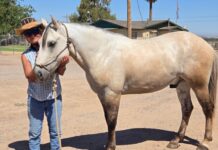
HEBER, Ariz — Newly obtained photographs and videos of free-roaming horses and activists on the Sitgreaves National Forest are intensifying debate over the condition and action of the controversial Heber herd, as federal officials argue in court that portions of the expanding population are already suffering from declining health, resource shortages, and deteriorating habitat conditions.
The court filing obtained by Mountain Daily Star shows that the USFS determined in 2025 that 21 percent of Heber horses had a body condition score of 3 or lower. We went into the forest to see if those numbers are correct: Here are our findings. We also decided to include some of our videos being produced in episode 4 of the Free-Roaming Arizona Horse Series.
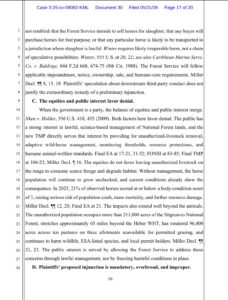
“In 2025, 21% of observed horses scored at or below a body-condition score of 3, raising serious risk of population crash, mass mortality, and further resource damage,” the filing states.
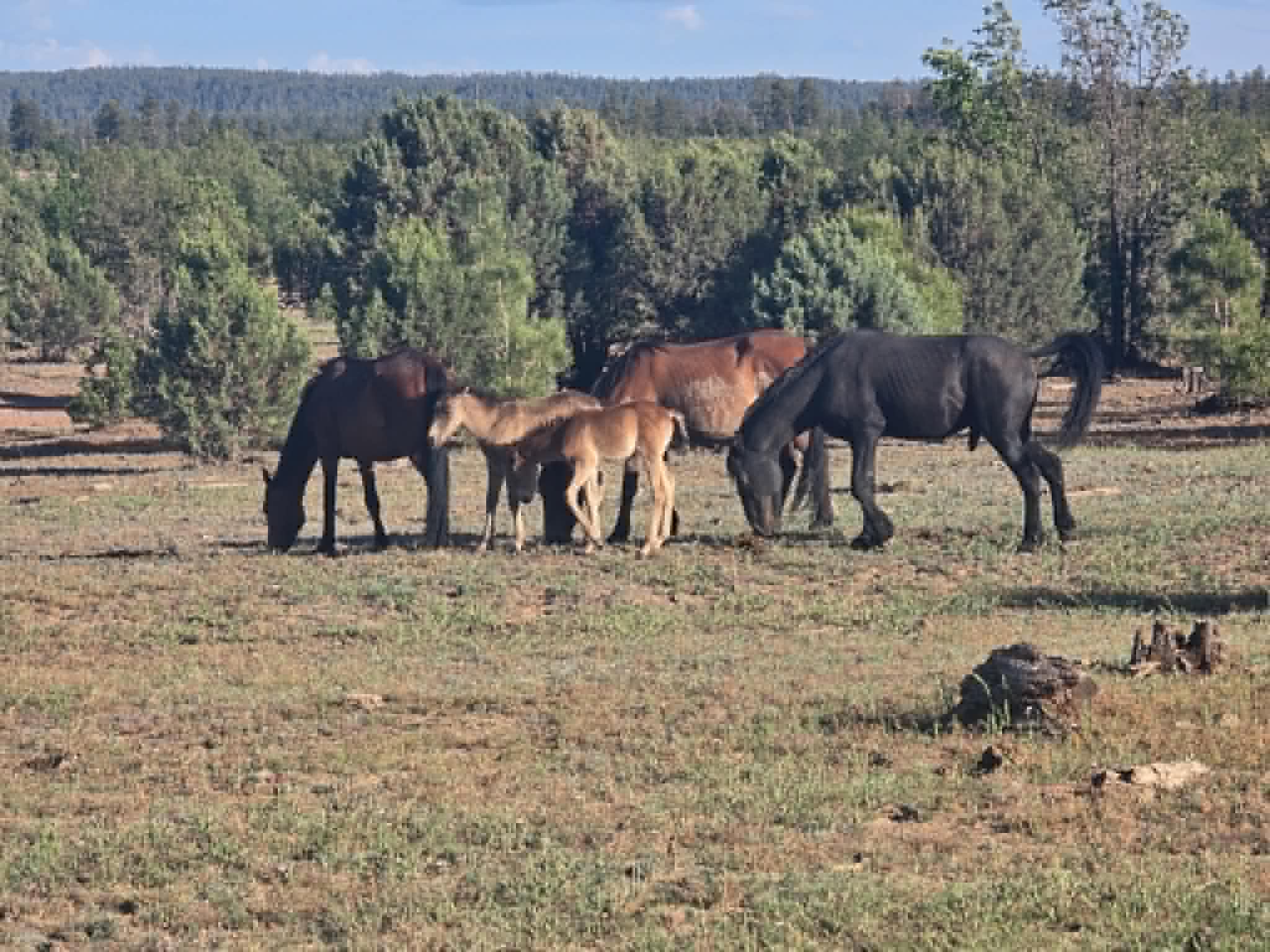
The images, recently obtained by Mountain Daily Star, show multiple horses grazing across forest meadows and timbered areas near and around Heber.
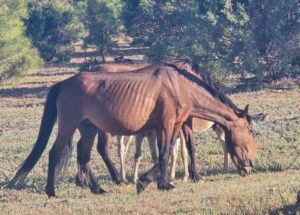
The mare appears to be pregnant from her foal heat, and she is nursing a foal that looks to be about a month old. According to the Henneke Body Condition Scoring system, the horse photographed near Heber appears to fall within approximately a Body Condition Score of 2 to 3, placing it in the “very thin” to “thin” category. The horse shows sharply visible ribs, a pronounced spine and topline, significant muscle loss along the neck and shoulders, and minimal fat coverage across the body. Under the Henneke scale, a score of 3 indicates a thin horse with visible ribs and reduced body condition, while a score of 2 reflects a severely underconditioned horse with extreme prominence of bone structure and little remaining fat or muscle tissue.
Check out episode 2-Jackie Hughes, she addresses some of the issues prior to the lawsuits.
The horse remained upright and grazing when the photograph was taken, but the visible condition aligns with federal court filings alleging that a portion of the Heber-area horse population is already experiencing declining body condition due to increasing pressure on available forage and habitat resources.
Another horse photographed in the area appeared to show a potentially serious front-leg abnormality or injury. The horse appeared to place uneven weight on the leg while grazing and attempting to urinate, with the limb showing an unusual bend or posture that could indicate a chronic injury, deformity, or mobility issue. Due to the distance and image quality, the exact nature of the condition could not be independently confirmed.
The stud is attempting to urinate and balance on the right front because he can’t bear weight on the left front due to a possible issue with the left knee. Video Credit: Mountain Daily Star, recorded on May 25, 2026.
The Forest Service argues the public interest favors “lawful, science-based management” of the Sitgreaves National Forest, including adaptive horse management, resource protections, and humane animal welfare standards.
According to the filing, federal officials contend the unauthorized horse population now occupies more than 211,000 acres of forest land and extends approximately 65 miles beyond the designated Heber Wild Horse Territory. The agency further claims that the expanding horse population has rendered approximately 96,400 acres across multiple grazing allotments unavailable for permitted livestock grazing, while continuing to affect wildlife habitat, ESA-listed species, and local permit holders.
In the filing submitted May 21 in Case No. 3:26-cv-08092-KML, federal attorneys argued that delaying intervention would worsen conditions both for the horses and the surrounding ecosystem.
“The equities do not favor leaving unauthorized livestock on the range to consume scarce forage and degrade habitat,” the filing states.
Federal filings further claimed that conditions in the landscape are already showing signs of ecological and animal-welfare decline.
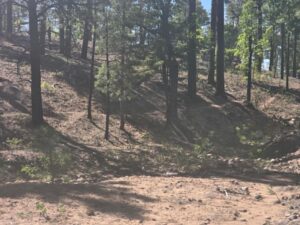
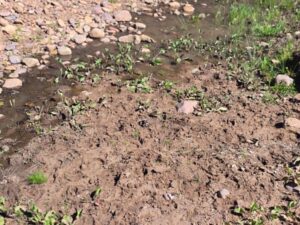
Photographs reviewed by Mountain Daily Star appear to show signs of declining habitat conditions in portions of the Sitgreaves National Forest where large numbers of horses are currently roaming. Images from the area show heavily grazed vegetation, exposed soil, trampled streambanks, and disturbed riparian areas with sparse regrowth near water sources. In several locations, vegetation appeared to have been cropped down to short stubble, while muddy hoof impacts were visible along wet creek edges and drainage bottoms. The conditions visually align with arguments raised in recent federal court filings, where the U.S. Forest Service stated that the expanding unauthorized horse population is consuming “scarce forage” and degrading habitat across more than 211,000 acres of forest land. The filing further argues that current conditions are contributing to resource damage, declining forage availability, and increasing stress on both wildlife habitat and the horses themselves.
The Heber horse controversy has become one of the most divisive public lands disputes in Arizona, drawing sharp, vulgar disagreement among horse activists aimed at conservationists, ranchers, hunters, contractors, and federal land managers.
Some horse activists argue that the horses are historically significant free-roaming animals deserving continued protection and accuse agencies of overstating environmental damage to justify removals. The data show that the Heber horses are not part of the original herd under protection, and that the environmental impacts are severe.
Others, including some conservation groups and range specialists, argue that the current population levels are unsustainable and are leading to worsening range degradation and visible suffering among the horses themselves.
The newly surfaced photographs and videos are likely to deepen that divide.
Note: Some horses seen by Mountain Daily Star show horses in moderate condition roaming forested terrain and open meadows. Others, however, depict horses with visible signs of physical stress, reduced body condition, and potential mobility issues.
The Forest Service argues those conditions will continue to worsen without intervention.
“The public interest is served by allowing the Forest Service to address these concerns through lawful management, not by freezing harmful conditions in place,” federal filings explained.
It’s clear that about 21 percent or more of the horses are in desperate need of help, and the USFS is trying to get them the help they need, but the horse activists have stopped the USFS with lawsuits and have gone as far as to physically relocate the horses on foot in the forest.
What’s interesting is that the activists seem to have chased the horses away from their water sources. They have also locked gates that are supposed to remain open, forcing local ranchers to cut them so the horses can find water. This will be addressed fully in episode 4 of the Free-Roaming Arizona Horse Series.
This video has no sound because we don’t want the person who recorded it to be harassed. Two people run the horses out of the area where a water source is located, then close the gates leading to the water source. The ranchers had to cut the gates, and then the activists strung a tarp across the location, which also had to be removed.
Note to readers: Some horse activists have intentionally harassed many locals with vulgar language, abusive social media comments, and posts that seem to be a form of intimidation to stomp on the First Amendment of the U.S. Constitution. This is being compiled in episode 4. Stay tuned.