
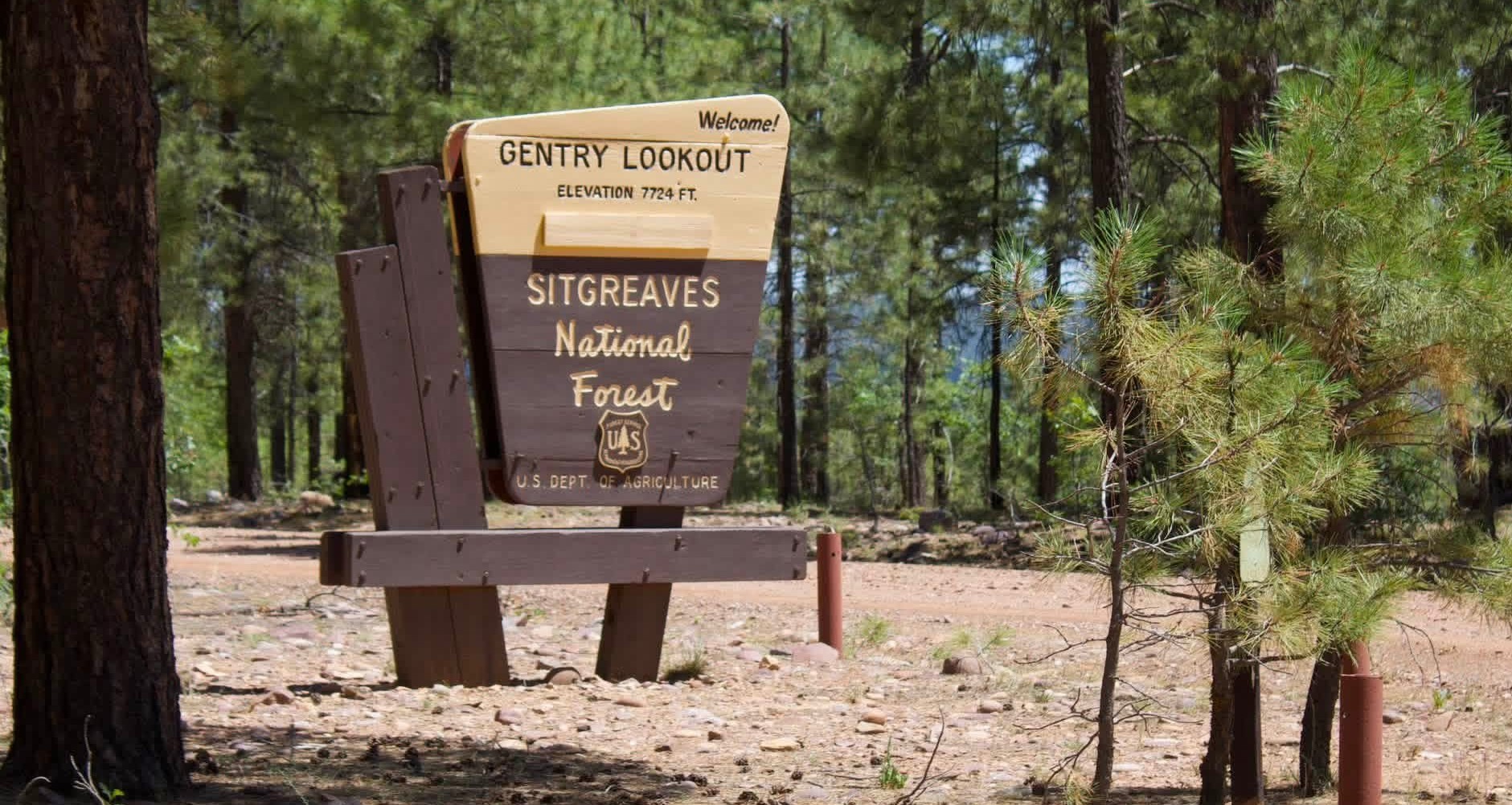
The Apache National Forest and Sitgreaves National Forest are often referred to together as the Apache-Sitgreaves National Forests, but they remain two distinct national forests that have been managed under a single administration since 1974. A federal court is now being asked to determine whether an injunction issued in the case extends across both forests or is limited to the Sitgreaves National Forest.
The origins of the two forests date back to the conservation movement of the early 20th century. President Theodore Roosevelt, a strong advocate for conserving America’s public lands, used the authority granted under the Forest Reserve Act to expand and protect millions of acres of federal forestland across the West. During his presidency from 1901 to 1909, Roosevelt established or expanded numerous national forests, laying the foundation for the modern U.S. Forest Service, which was created in 1905. The lands that would become the Apache and Sitgreaves National Forests were set aside during this era to protect watersheds, timber resources, wildlife habitat, and public lands for future generations.
The official name is Apache-Sitgreaves National Forests (plural), because it consists of two administratively combined national forests.
The Apache National Forest is the larger of the two forests, encompassing much of southern Apache County and Greenlee County. It stretches east toward Springerville, Eagar, Alpine, Escudilla Mountain, and the New Mexico border. The forest is known for its rugged backcountry, high-elevation spruce and fir forests, and the White Mountains. It was named in honor of the Apache people, whose history in the region dates back centuries.
The Sitgreaves National Forest lies primarily across Navajo County, southern Coconino County, and portions of western Apache County. It includes communities such as Heber-Overgaard, Show Low, and Pinetop-Lakeside, as well as the Mogollon Rim and many of Arizona’s popular mountain lakes, including Woods Canyon Lake, Willow Springs Lake, and Black Canyon Lake. The forest is named after Capt. Lorenzo Sitgreaves, who led a U.S. Army expedition through Arizona in 1851.
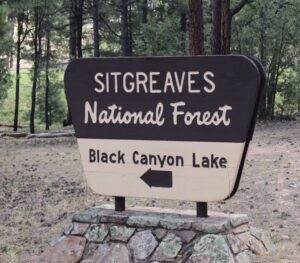
The distinction between the two forests has become a central issue in ongoing federal litigation over management of the Heber Wild Horse Territory.
The lawsuit began on April 22, 2026, when the International Society for the Protection of Mustangs and Burros and Heber resident Betty Nixon (plaintiffs) filed a complaint in the U.S. District Court for the District of Arizona against the U.S. Department of Agriculture, Secretary of Agriculture Brooke Rollins, the U.S. Forest Service, Chief Tom Schultz, Regional Forester Michelle K. Cottrell, Apache-Sitgreaves National Forests Supervisor Joshua Miller, District Ranger Josh Delis, and other federal officials (defendants). The lawsuit challenges the U.S. Forest Service’s determination that unclaimed and unbranded horses found on the Sitgreaves National Forest do not qualify for protection under the Wild Free-Roaming Horses and Burros Act. Along with the complaint, the plaintiffs sought emergency court intervention to halt the planned roundup, arguing the removals would cause irreparable harm before the court could rule on the case.
On July 8, 2026, U.S. District Judge Krissa M. Lanham issued a preliminary injunction prohibiting the U.S. Forest Service from capturing or removing unclaimed and unbranded horses within the Apache-Sitgreaves National Forests while the lawsuit proceeds. Although the Heber Wild Horse Territory is located within the Sitgreaves National Forest, the wording of the injunction has become the focus of a new dispute over whether it applies only to the Sitgreaves National Forest or extends to the Apache and Sitgreaves National Forest.
It’s important to note: The Apache National Forest has already been the subject of separate federal litigation concerning horse removals. In Salt River Wild Horse Management Group v. U.S. Department of Agriculture, U.S. District Judge John J. Tuchi considered challenges to the U.S. Forest Service’s horse management program involving the Alpine and Springerville ranger districts of the Apache National Forest. While that case involved a different population of horses and different legal claims than the current Heber Wild Horse Territory litigation, it demonstrates that horse removals on the Apache National Forest have previously been reviewed in federal court. Tuchi dissolved a temporary restraining order and denied a request for a preliminary injunction, allowing the U.S. Forest Service to continue horse management activities on the Apache National Forest while that lawsuit remained pending.
In its response to the preliminary injunction, the U.S. Forest Service asserted that the Apache and Sitgreaves National Forests are separate national forests and asked the court to clarify that Judge Krissa M. Lanham’s injunction applies only to the Sitgreaves National Forest. The agency noted that the forests are separated by communities and other non-federal lands, and argued that the Heber Wild Horse Territory is located entirely within the Sitgreaves National Forest. On that basis, the Forest Service asked the court to clarify that the preliminary injunction applies only to the Sitgreaves National Forest.
The plaintiffs, through their attorney, asked Judge Lanham to reject the Forest Service’s request to narrow the injunction to only the Sitgreaves National Forest. The plaintiffs argue the Forest Service consistently referred to the land as the Apache-Sitgreaves National Forests throughout the administrative process and earlier court filings and should not now be permitted to interpret the injunction more narrowly. The defendants acknowledge that the Apache and Sitgreaves National Forests were established separately in 1908 but have been managed together as a single administrative unit since 1974. The dispute before the court is not whether the two forests legally became one national forest, but whether Judge Lanham’s injunction should apply only to the Sitgreaves National Forest or to the broader Apache-Sitgreaves administrative unit.
The legal dispute could have implications beyond horse management. Portions of the Apache National Forest provide designated critical habitat for the endangered New Mexico meadow jumping mouse, a federally protected species. In 2021, the U.S. Forest Service entered into an agreement with the Center for Biological Diversity and other conservation organizations to protect the mouse’s sensitive riparian habitat within the Apache National Forest.
Robin Silver, co-founder of the Center for Biological Diversity, called the decision by Judge Tuchi regarding the earlier decision on the Apache National Forest “an important victory for jumping mice and Arizona’s rapidly disappearing riparian habitat,” adding, “The law protects the jumping mouse’s home in these beautiful mountain streams and meadows, and thanks to this agreement it’ll finally be enforced.”
The Center also argued that free-roaming horses on the Apache National Forest had damaged the endangered mouse’s habitat. In the same announcement, Mark Larson, president of the Maricopa Audubon Society, said, “Cattle and feral horses have trampled and fragmented the jumping mouse’s mountain home, so this agreement should go a long way toward repairing that damage. The cows have been removed, but hundreds of destructive feral horses must be rounded up before they do more damage and push these mice closer to extinction.”
The court has not yet ruled on the Forest Service’s request that Judge Lanham clarify or modify her July 8 preliminary injunction. If she agrees with the plaintiffs’ interpretation, the injunction could continue to apply across both the Apache and Sitgreaves National Forests while the litigation proceeds.
The ruling presently halts all horse management efforts on both forests until the court reaches a decision on the injunction’s jurisdiction.
Supporters of the Forest Service’s management efforts on both the Apache and Sitgreaves National Forests argue the injunction could affect years of conservation work completed by the Center for Biodiversity and others. They contend the Forest Service and conservation organizations have invested multiple resources restoring watersheds, protecting endangered species, and repairing sensitive riparian habitat that could be irreversibly affected if management actions are further restricted.